


Long before sprays and synthetic fresheners lined store shelves, our grandmothers had their own quiet rituals for keeping fabrics fresh, moths away, and monsoon dampness at bay. These weren't fleeting trends - they were practical, tested solutions, refined over generations of humid Indian summers and long monsoon months. At House of Rani, we believe some of the best solutions are the oldest ones - simple, natural, and passed down through generations. Here are four time tested traditions worth bringing back into your own wardrobe, along with a few tips on how to use them well.

Freshness doesn't need to come from a can; sometimes it comes from a handful of cloves, a few leaves, and a little patience.
1. A Centuries-Old Secret: Cloves
Tuck a small handful of whole cloves into a pouch or fold them into your linens, and you'll find they do double duty - naturally warding off moths while lending your clothes a warm, gentle fragrance. It's a trick that's been used in homes for generations, requiring nothing more than a few cloves and a corner of your almirah. Cloves work because their natural oils are unpleasant to moths and silverfish, while being gentle and pleasant to us. For best results, replace the cloves every few months, as their scent - and their effectiveness - fades with time. A muslin pouch or an old cotton sock works just as well as a fancy sachet.

2. Nature's Quiet Companion: Neem Leaves
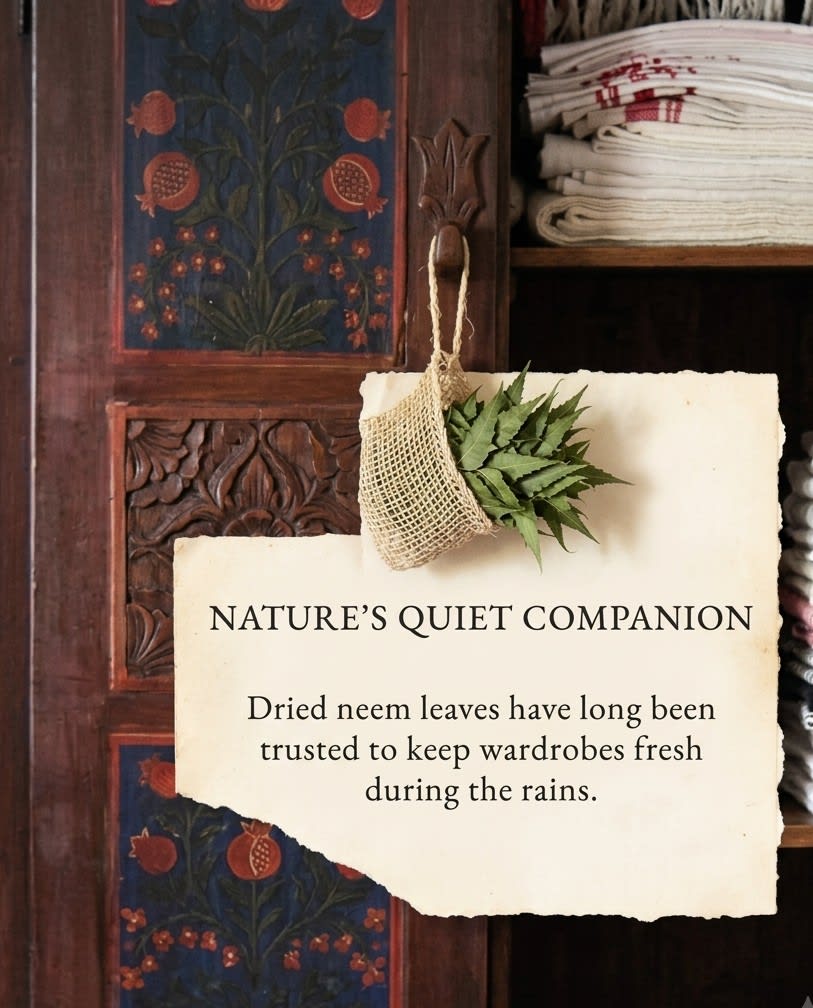
Dried neem leaves have long been a monsoon-season staple in Indian homes. Slipped into a breathable cotton or jute pouch and hung inside a cupboard, they help keep dampness, insects, and mustiness away - a quiet, plant-based companion for your wardrobe through the rainy months. Neem's natural antibacterial and antifungal properties make it especially useful during the monsoon, when humidity invites mould and mildew into closed spaces. A handful of dried neem leaves tucked between folded sarees, or scattered along the base of a wardrobe shelf, can make a noticeable difference to how fresh your clothes smell after weeks of storage.
3. Miniature Guardians: Silica Gel Sachets
Not every tradition is centuries old - some are simply smart. Small silica gel sachets work as miniature guardians against hidden moisture, tucked into suitcase pockets, drawers, or storage boxes. They quietly absorb dampness so your fabrics, leather, and keepsakes stay dry and well-preserved. Unlike cloves or neem, silica gel doesn't add fragrance - it simply pulls moisture out of the air, making it ideal for storing delicate silks, embroidered pieces, or leather accessories where dampness could cause staining or a musty smell. Keep a few sachets in every storage trunk, and replace them once they feel heavier or lose their moisture-absorbing effect.
4. A Timeless Monsoon Tradition: Camphor
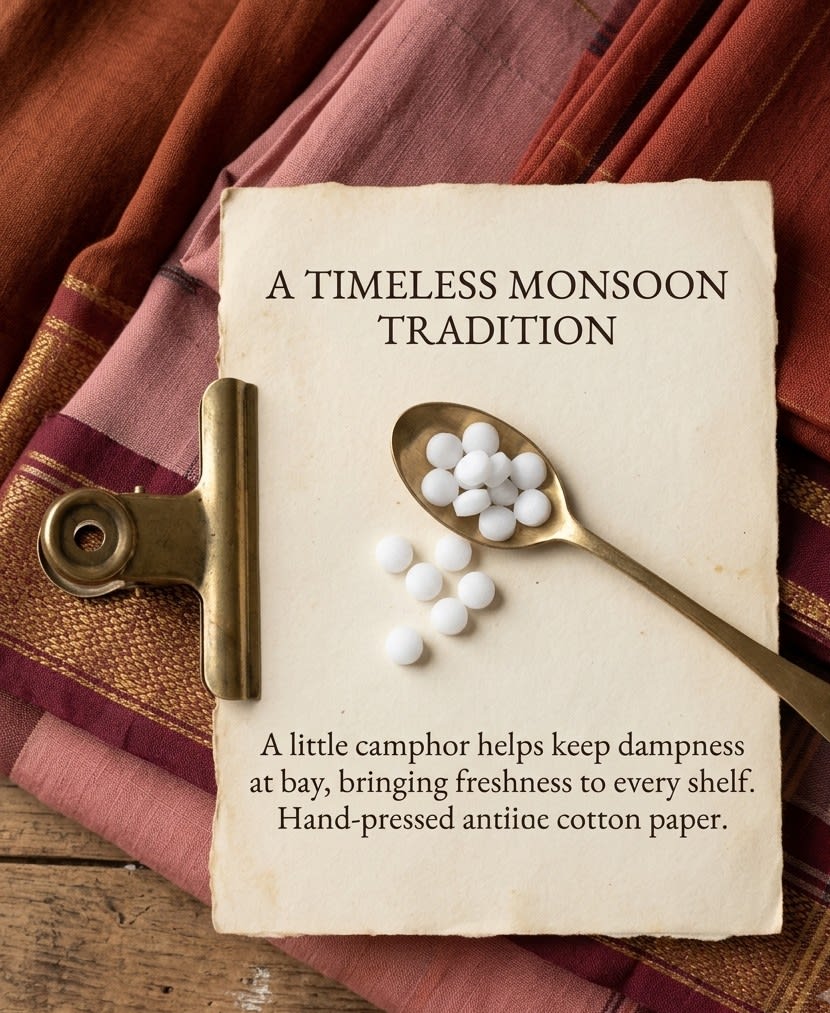
A few camphor tablets placed on a shelf or inside a fold of fabric have long been trusted to keep dampness and must at bay. It's a small ritual with an outsized effect - bringing a clean, fresh scent to every shelf, season after season. Camphor is particularly effective against silverfish, which thrive in the damp, dark corners of almirahs during the rainy season. A tablet or two wrapped in a thin cloth and placed in each shelf corner is usually enough - camphor is potent, so a little goes a long way, and it's best kept away from direct contact with delicate fabrics.
Bringing These Traditions Together
None of these remedies need to be used in isolation. Many households layer a few cloves with a silica sachet, or pair dried neem leaves with a camphor tablet, for a combination that tackles both fragrance and moisture at once. The key is consistency - refreshing pouches and sachets every couple of months, airing out your wardrobe on dry days, and avoiding overcrowding shelves so that air can circulate freely between garments. These small habits, done regularly, do more for the long-term health of your fabrics than any single product ever could.
Keeping Your Sarees as Fresh as the Day You Bought Them
These small rituals are especially worth following for pieces you truly treasure. A hand-dyed Sunset Orchid Shibori Cotton Saree, also available in a vibrant Yellow, deserves a few cloves and a silica sachet folded alongside it in storage, so its cotton weave and dye stay crisp between wears. The same goes for the deep, festive tones of the Berry Bloom Shibori Tie-Dye Saree in Vintage Wine - a little neem and camphor go a long way in keeping its colours and cotton in perfect condition between wears, especially if it's stored through a humid monsoon season.
The takeaway: A pinch of cloves, a few neem leaves, a silica sachet, or a bit of camphor - these small, natural additions have protected wardrobes for generations, and they still do the job beautifully today. Whether you follow one tradition or combine all four, your sarees and everyday fabrics will thank you with fewer moth holes, no musty smells, and colours that stay as vivid as the day you brought them home.
Responses(0)
Be the first to share your thoughts on this story.